

Hospital Security to Safety Standards – A Solid Foundation for Modern Healthcare Environments
In the healthcare system, hospitals are not just places for medical examination and treatment but also specialized spaces requiring a very high level of safety and discipline. Every day, hospitals continuously receive a large number of patients, their relatives, doctors, nurses, medical staff, partners, and suppliers. This complexity poses latent risks of disorder, conflicts, theft, and other security incidents. Therefore, hospital security according to safety standards, as provided by Thai Long Security 24/7, has become a mandatory requirement to ensure healthcare security, maintain stable medical examination and treatment operations, and build a professional and trustworthy hospital image.
Contact us now: 0925.55.13.13
Unlike conventional security models, hospital security needs to meet two simultaneously crucial factors: strict safety measures while ensuring humanity, support, and a sense of reassurance for patients, their families, and the medical team.
Current State of Security and Safety in Hospital Environments
Hospitals – Sensitive Environments with Numerous Potential Risks
Hospitals are places where many different groups of people with varying emotional states converge. Patients and their families are often stressed and anxious about their health and treatment costs. If not guided and controlled effectively, these negative emotions can easily lead to disorder, arguments, or excessive behavior.
Furthermore, hospitals store many high-value assets, including medical equipment, medications, medical records, and personal belongings. This necessitates the implementation of well-planned, professional, and continuous hospital security according to safety standards.
Increasing Safety Demands in the Healthcare Industry
Society is increasingly concerned about the quality of healthcare services, with security and safety being critical criteria. A safe hospital not only protects people and assets but also contributes to enhancing the patient experience, reducing pressure on medical staff, and elevating the reputation of the healthcare facility.
Why Do Hospitals Need Security According to Safety Standards?
Ensuring Comprehensive 24/7 Security and Safety
Hospitals operate continuously day and night, especially in critical areas like emergency rooms, intensive care units, and operating theaters. Maintaining a 24/7 hospital security force according to safety standards helps control risks at all times, preventing any security gaps.
Protecting People – The Most Important Factor
Safety standards in hospitals prioritize people. Security personnel not only protect assets but also safeguard doctors, patients, and visitors from disruptive behavior, assault, or unauthorized entry.
Maintaining Order and Discipline in the Healthcare Environment
An orderly and disciplined healthcare environment facilitates smooth medical examination and treatment operations, minimizes errors, and enhances treatment effectiveness.
Safety Standards in Hospital Security
Access Control Standards
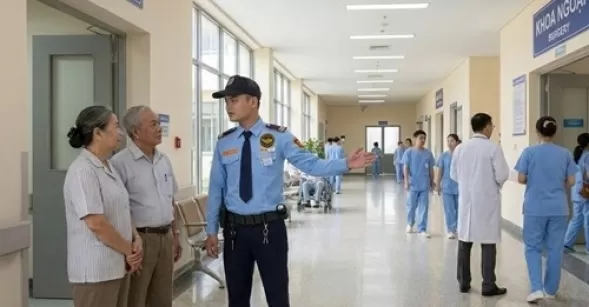
Controlling the entry and exit of people and vehicles is the most basic safety standard. Hospital security personnel guide, direct traffic, check, and monitor to ensure only authorized individuals and vehicles enter and exit the designated areas.
Safety Standards for Sensitive Areas
Areas such as emergency rooms, intensive care units, operating theaters, and pharmacies require stricter security than general areas. Security personnel are stationed to control the number of people entering and exiting and to handle any emergent situations.
Patrol and Surveillance Standards
Regular and unscheduled patrols throughout the premises help detect potential safety risks early, allowing for timely intervention before incidents occur.
Emergency Response Standards
Hospital security according to safety standards requires personnel to be trained in handling emergency situations such as conflicts, disturbances, fires, security breaches, and to coordinate with relevant departments to ensure overall safety.
The Role of Hospital Security Personnel According to Safety Standards
Controlling Order and Managing Crowd Flow
Hospital security personnel help manage crowd flow at entrances, lobbies, and examination areas, preventing congestion and ensuring a quiet, orderly medical environment.
Assisting and Guiding Patients and Visitors
In addition to security duties, security guards also play a role in guiding, assisting, and providing basic information, contributing to an improved patient experience.
Collaborating with Medical Teams and Management
Hospital security does not operate in isolation but collaborates closely with the hospital administration, administrative departments, and medical teams to ensure safety standards are effectively implemented.
Risks if Hospitals Do Not Comply with Safety Standards
Increased Risk of Conflicts and Security Incidents
The lack of clear safety standards leads to reactive security measures, making it prone to disorder, altercations, or assaults on medical staff.
Compromised Safety for Patients and Visitors
Poor security can cause anxiety for patients, impacting their treatment process and the hospital's image.
Damage to Hospital Reputation and Brand
A serious security incident can have a long-lasting negative impact on the healthcare facility's reputation within the community.
Hospital Security Solutions According to Safety Standards from An Ninh Thái Long 24/7
With extensive practical experience in healthcare security, hai Long Security 24/7 is a reputable provider of hospital security services according to safety standards for numerous healthcare facilities in Ho Chi Minh City and surrounding areas.
On-site Survey and Development of Standardized Security Plans
An Ninh Thái Long 24/7 conducts detailed surveys of each area within the hospital, assesses risks, and develops tailored hospital security plans that align with the hospital's scale, operational characteristics, and safety requirements.
Well-Trained, Specialized Security Team
Security personnel are carefully selected and trained in healthcare security operations, communication skills, sensitive situation handling, and professional, humane conduct according to safety standards.
24/7 Security and Safety Maintenance
Security personnel are stationed 24/7 at key locations, ensuring continuous maintenance of safety standards, including during nighttime, holidays, and peak hours.
Benefits of Implementing Hospital Security According to Safety Standards
Creating a Safe and Humane Healthcare Environment
Safety standards help transform the hospital into a safe and friendly space for medical examination and treatment, providing peace of mind for patients and their families.
Enhancing Service Quality and Hospital Reputation
Professional hospital security according to safety standards contributes to building the image of a modern and trustworthy hospital.
Reducing Pressure and Risks for Medical Staff
With ensured security and safety, medical professionals can fully concentrate on their expertise, leading to improved treatment outcomes.
Frequently Asked Questions (FAQ)
1. What is hospital security according to safety standards?
Answer: It is a security service implemented with specific processes, operations, and safety requirements tailored for the healthcare environment, ensuring 24/7 security, order, and safety.
2. Why do hospitals need to adopt safety standards in their security operations?
Answer: Because hospitals have high traffic, many sensitive situations; safety standards help mitigate risks, conflicts, and incidents that could affect medical examination and treatment operations.
3. What does hospital security safety standard encompass?
Answer: Access control, protection of sensitive areas, patrol and surveillance, emergency response, and ensuring the safety of people and property.
4. What are the requirements for hospital security personnel?
Answer: They must be trained in healthcare security operations, communication skills, handling sensitive situations, and possess a professional, humane demeanor.
5. Does hospital security according to safety standards operate 24/7?
Answer: Yes. Healthcare security needs to be maintained continuously day and night, especially in emergency rooms, critical care units, and during peak hours.
6. Does hospital security service control access?
Answer: Yes. Security personnel guide, direct traffic, and control the entry and exit of people and vehicles in accordance with the hospital's safety regulations.
7. Does hospital security according to safety standards help reduce conflicts?
Answer: Yes. Security personnel identify potential tensions early and proactively intervene to stabilize the situation before altercations occur.
8. Does this service ensure the safety of doctors and patients?
Answer: Yes. It helps prevent disruptive behavior, assaults, and protects the physical and mental safety of medical staff and patients.
9. What factors influence the cost of hospital security according to safety standards?
Answer: It depends on the hospital's size, the number of security posts, shifts, the level of required safety, and the specific medical operational characteristics.
10. Which reputable provider should be chosen for hospital security according to safety standards?
Answer: Healthcare facilities can choose Thai Long Security 24/7 – a provider with practical experience in hospital security, fully meeting 24/7 safety and healthcare security standards.
Contact Information for Hospital Security Services According to Safety Standards
Hospitals and healthcare facilities in need of hospital security according to safety standards are kindly invited to contact:
- Hotline: 0925.55.13.13
- Address: No. 41 Street T1, Tay Thanh Ward, Ho Chi Minh City, Vietnam
- Email: anninhthailong247@gmail.com
- Tax Code: 0318680886
- Website: https://anninhthailong247.vn
Hospital security according to safety standards is not just a security solution but also a cornerstone that helps hospitals operate stably, improve medical quality, and develop sustainably with Thai Long Security 24/7.